Rockwool Lapinus BV, Roermond, Manager Prod-uct Development
DSM Research BV, Geleen, Manager Research & Development Building Products
DSM Research BV Geleen: Project manager Fuel Cells (ESA Space Program, Hermes Project)
A+ Bureau voor bouwproductontwikkeling BV, Kelpen-Oler, Co-founder and Managing Director
Eindhoven University of Technology, Department of the Built Envi-ronment: Professor, chair Product Development
Inno-Experts BV, Eindhoven, Co-founder and Inno-Expert
Advisory activities in various projects, operating under ‘Lichtenberg consultancy’
Founding a new master track ‘Healthy and Sustainable Built Environ-ment’ (MSc) including an attached Research Programme at the Uni-versity of Maastricht and Zuyd Hogeschool Heerlen
Booosting (Foundation for Industrial Building in the Netherlands), Rot-terdam, member and later (1999) chairman of the board
Booosting (Foundation for Industrial Building in the Netherlands), Rot-terdam, member of the Advisory Board
TU Delft, Architecture, Urbanism and Building Sciences, Building Technology: Course Product Development and Marketing (visiting lecturer)
Publicist in professional Journals (among others in Cobouw)
Author book ‘Slimbouwen®, published by Æneas, Boxtel (ISBN 90-75365-74-8)
Slimbouwen Foundation: Founder and President of the board
European Centre of Competence in Building Innovation: President of the board
BouwIQ, professional Journal, Chief Editor (published by Æneas, Boxtel)
Telos, Brabants Centrum voor duurzaamheidvraagstukken (Brabant centre for Sustainable Development), member of the advisory board
Toetsingscommissie Bouwbesluit (Committee Assessment Product Directives according Building Code), ‘Ministry of Housing, Spatial Planning and the Environment’, nowadays ‘Ministry of the Interior and Kingdom Relations’ – (Stichting Bouw Kwaliteit): presiden
SVE (Stichting VIBA Expo), member of the advisory board
Initiation and realisation of the House of Tomorrow Today (HoTT, demonstration and research project in the frame of Slimbouwen and Active House)
Commissie Milieuprestaties Bouw- en GWW-werken (Committee Environmental Performance of Building and Civil Works), ‘Ministry of Housing, Spatial Planning and the Environment’, nowadays ‘Ministry of the Interior and Kingdom Relations’ – (Stichting Bouw Kwaliteit): president
Winner Lighthouse Club Building Award 2011
WE-adviseurs, member of the advisory board
Vereniging van Houtskeletbouwers (VHSB, Timber Frame Industry Association), President of the board
Active House NL Foundation, member of the Board
|
|
Dutch Perspective on the Construction Industry regarding Sustainable Development
By the time buildings that are being built today, are at the end of their lifespans, its materials and products will probably rather scarce and consequently quite valuable. A technical boundary condition is that these buildings should not be demolished but disassembled. And it is our challenge today to develop products and to design buildings that have this ability.
An important movement was launched at the beginning of this millennium, named IFD. The abbreviation stands for Industrial, Flexible and Disassembly. In the frame of a national programme some 90 projects and systems were developed. Although IFD as a concept is hardly used anymore nowadays, it has spurred quite a number of new developments. Furthermore the Netherlands was one of the first countries to embrace Braungart and McDonnoughs Cradle to Cradle (2002), a vision on circularity (waste equals food).
Both movements inspired ever since many students and PhD’s to research and develop ideas, concepts, systems.
New movements were introduced like ‘Living building’ or ‘Legolisation’ (de Ridder, 2011) and Conceptual Building (Huijbregts, 2010), based on the development of propositions rather than being an all-rounder.
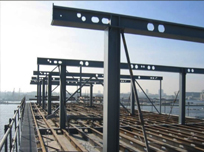
Slimbouwen (Lichtenberg, 2004 and 2005) was introduced to create order in the rather complex maybe even chaotic organization of property development and realisation. The reset is based on a division of the process into four independent sub processes (Structure, Envelope, Services and Finish). provoking new approaches, technology and visions supporting also the adaptability of buildings. Some 60-70 projects were developed in the Netherlands according to the Slimbouwen vision.
Apart from flexible technology with regard to services as it was developed in the frame of Slimbouwen, the industry was also challenged to develop circularity. Not only to be able to recycle material as a technical solution but also to create new business models. As an example the metal façade industry (VMRG) launched new ideas with regard to ownership of aluminium that is applied in projects. Architect Thomas Rau initiated Turntoo where the investor of a building is not buying products, but functions, e.g. not luminaires but light. Products remain suppliers’ property as an incentive to maintain the function.
|
