Adnan Pasic

Lecture series /opening:
Vision 2030
19 October 2026
19:00 h

Adnan Pašić , University of Sarajevo

(Zagreb, 1967) is an architect and a full professor of architectural design at the University of Sarajevo Faculty of Architecture, who started his professional career at the Institute for Architecture, Urbanism, and Spatial Planning in Sarajevo in 1991. He has taught at universities in the USA, the Netherlands, Turkey, Japan, Switzerland, Austria, Croatia, and Bosnia and Herzegovina, and was a visiting professor at the Faculty of Architecture at Istanbul Technical University.

He is the author of the book “Landscape City Architecture – University of Sarajevo Library” (2023) and the monograph “Architect Ivan Štraus” (2011), and co-author of the books “Dynamic Architecture” (2015) and “Sustainable Strategies for Kadıköy Istanbul” (2013), published by the University of Twente.

He is an award-winning author of projects and realizations in the field of public building architecture and urban design, nationally and internationally published and presented in 4 solo and over 20 group exhibitions in Europe and Asia.


Collaboration 

The thirty past years of the Bosnian and Herzegovinian urban planning and architecture reflects the global trend of resistance and solidarity of the professional and social groups toward the continuous process of deregulation, fragmentation and weakening of the positive planning and professional standards and practices, established through the XX century, driven by the ambitions of the narrow political and managerial elites. Their focus are public spaces and public domain at all, with paramount ambition of changing the worlds’ complex natural, cultural and historical environments in the luxury places for the sake of lucrative new normality.

Can urban planning and architecture could serve as the field of reconciliation of woundable societies and Bosnia and Herzegovina still is?

Can architects, planners and engineers offer models for the positive perspectives of our cities and societies?

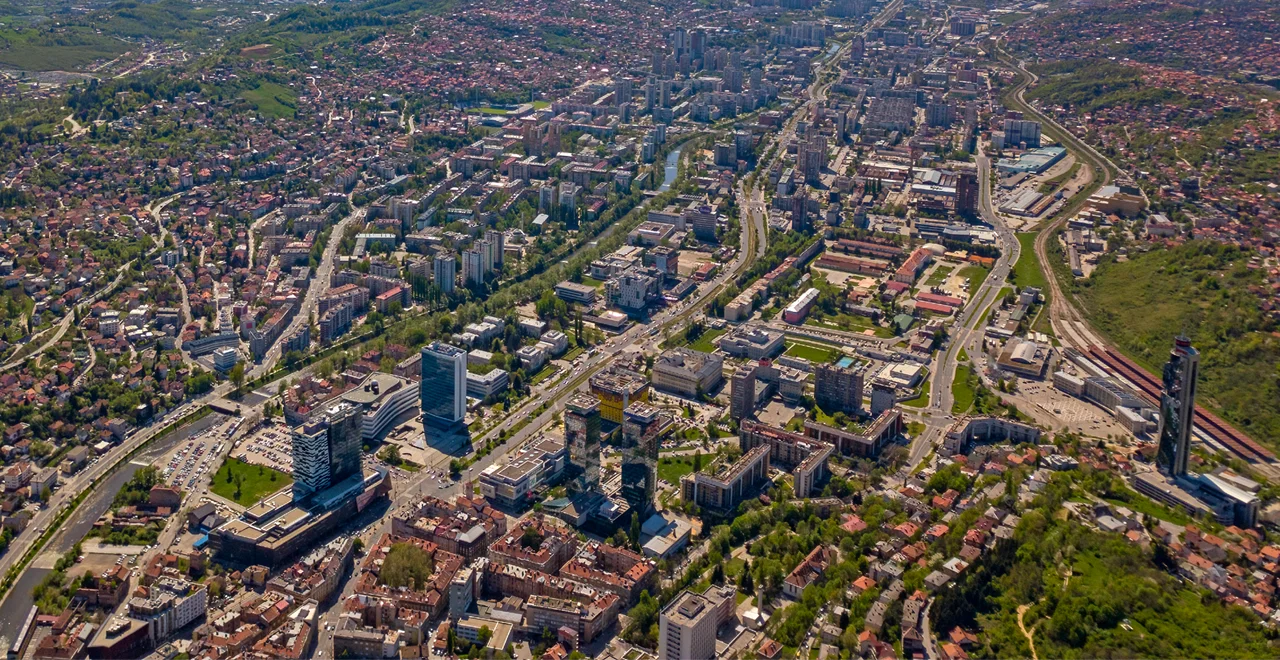
The vitality of the profession in such context is possible to develop through the collaborations who gain the lost professional territories and capacities of making the cities the better places for their citizens. The case study is focused on city of Sarajevo, Capital of Bosnia and Herzegovina, where architects and urban planners through the collaborative academic, research, professional and development project are focused on the city urban and transformation of the University of Sarajevo Campus, as the focal point of the development of positive perspectives for the city and its citizens.