The Long Game: A Decade of Small Actions for the Vrbas River
The Vrbas River has long shaped the landscape and identity of Banja Luka. Yet its relationship with the city remains unresolved. Much of its urban riverfront is inaccessible, untreated wastewater continues to enter the river, while recent interventions by the local administration have introduced extensive construction and concrete into the riverbed, despite environmental concerns and contested regulatory procedures.
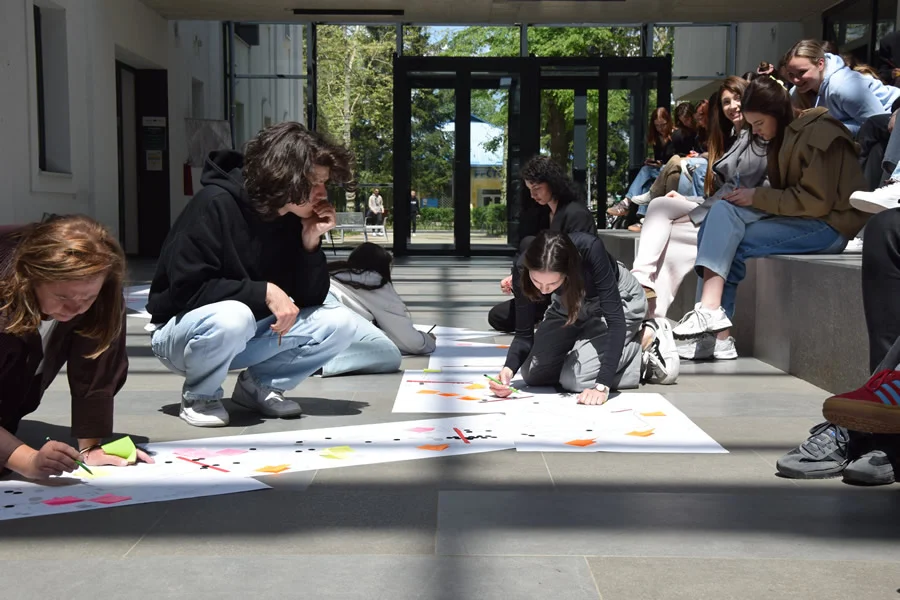
Against this background, a series of small actions has unfolded along the Vrbas over nearly a decade. The Banjalučki mol (2017) explored the possibility of bringing everyday public life closer to the river through a temporary riverside intervention. The Sewage Pipes Festival (2021) used mapping, performance and installation to draw attention to the largely normalised problem of untreated wastewater. In 2025, the campaign Vrbas is Neither a Construction Site — Nor a Trash Can brought together students, architects, environmental activists and civil society organisations in response to construction within the riverbed, using visual communication, documentation and public action to question the ongoing transformation.
These actions did not stop the processes they questioned. The wastewater treatment system remains unbuilt, construction within the riverbed continued, and the gap between civic action and institutional decision-making remains evident. Their significance may therefore lie less in measurable outcomes than in the continuity of the process itself: repeatedly returning to the river, making different problems visible, testing forms of public engagement, and accumulating knowledge, experience and networks around a shared environmental concern.
The lecture reflects on this decade-long process as a long game — one in which small actions do not necessarily produce immediate transformation, but keep questions open, sustain public attention and preserve the possibility of imagining a different relationship between the city and its river.